About
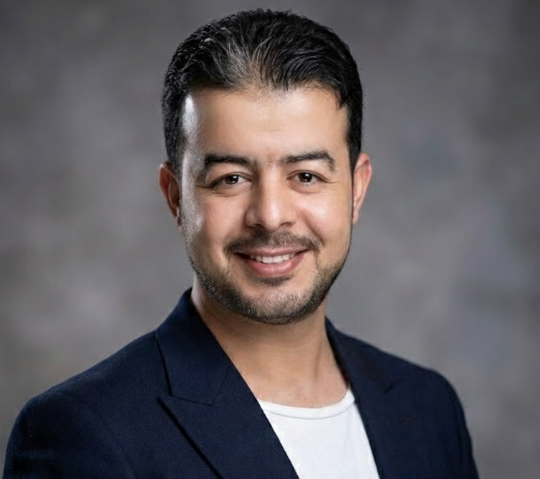
I’m Amine. I build software, and I stay to look after it.
I’m a software developer in Morocco, working remotely with clients worldwide. AmineLG is my software business: I build and look after software for clients, and I develop my own tools, mostly in the open. When you work with AmineLG, you work with me.
- Based in
- Morocco (UTC)
- Languages
- English, French, Arabic
- Works with
- Clients worldwide, remotely
Now
What I do.
Software for clients
I build, fix and look after software for companies and individuals, from a single automation to the platform it runs on.
My own software
Tools I build for myself and publish, mostly to work out how AI and ordinary software should fit together. Each is labelled for what it is.
- IntentSQLPublic alpha
- Decision LabExperimental
- LineageEarly v1
- Obsidian Text Transformer129 stars
- Aim Duel platformLive
How I got here
How the work evolved.
From my first local-model tool in 2024, through platform work, to the approach I use today.
-
2024
Local models, inside ordinary software
In 2024 I started building seriously with local AI models through Ollama. Obsidian Text Transformer, an open-source tool, runs a model on your own notes with prompts you control, while the software around it (scanning, size limits, logging, writing the output) stays plain and predictable. That split, model for judgment and code for everything else, became the direction.
-
2025–26
Platforms and operations
In 2025 and 2026 I went deeper into Kubernetes and OpenShift: Red Hat certification (EX280 and EX180), a self-managed cluster where every release comes from Git (it runs this site and Aim Duel), and Lineage, a tool that explains who can access what in an OpenShift cluster, and why.
-
2026
AI decisions you can inspect
In 2026 the direction became much clearer. In IntentSQL the model never writes the SQL: it chooses between options the code has already checked, every decision is recorded, and a person confirms anything that changes data. Decision Lab compares how different decision models answer the same input, and what changes their mind.
-
Today
Client work and my own software
Today AmineLG is how I work: I build and look after software for clients, and I keep developing my own tools, mostly in the open. Client work keeps me close to systems that have to keep running. My own projects are where I work out better ways to build them.
The foundation
Years of client software that had to keep running.
Before any of the AI work, I spent years building software for paying clients. Since 2017 I’ve built trading systems for MetaTrader 4 and 5, and the Python and Node.js services around them (integrations, alerting, licensing), for clients in the United States, Australia, New Zealand and Singapore. It ran unattended in live markets, and I supported it for years, including two working relationships of eight and nine years.
That is where my habits come from:
- Rules before code. Most failures start as a misunderstanding, so I write the rules down with the client first.
- Failures must reach a person. Software that runs unattended needs logs, alerts and someone who reads them.
- Someone has to stay. Markets, APIs and platforms change. Long-term support is part of the job.
Amine is a person of integrity with unquestionable technical competency…
Why I build this way
The model proposes. The software decides what is safe.
- 01The model proposesA bounded choice, not free text.
- 02Code validatesAgainst real data, permissions and rules.
- 03Everything is recordedWhat was asked, what came back, and why.
- 04A person decidesAnything costly or hard to undo.
- 01
Guarantees belong in code.
A prompt can ask for good behaviour; only code can enforce it.
- 02
Refusing is a feature.
A system that says “I can’t do that safely” beats one that guesses.
- 03
Measure, then claim.
Tests and written limits, and public numbers that link to their source.
- 04
Boring infrastructure, on purpose.
Releases should be predictable and easy to undo.
- 05
Leave it operable.
Documentation and a handover, so you depend on the code and the docs, not on one person.
Things you can check
Checkable, not decorative.
Certifications verify on Credly. Upstream work is public on GitHub. I studied Applied Mathematics at university before moving into software.
Credly (opens in a new tab) GitHub (opens in a new tab) LinkedIn (opens in a new tab)
Red Hat certifications
- EX280Red Hat Certified System Administrator in OpenShift
- EX180Red Hat Certified Technologist in OpenShift
- Red Hat DO180, DO280 and DO380
Upstream contributions
Working with me
- Who you work with
- Me, directly: the person who scopes, builds, tests, deploys and explains it. No account managers.
- Where and when
- Morocco, UTC. Overlaps the European working day and North American mornings. Remote only.
- Languages
- English, French and Arabic.
- How it is set up
- Remote contract work under a written proposal: scope, price and payment terms agreed before anything starts.
- What you own
- The code, the accounts and the documentation. Work goes into your repositories.
- Replies
- I read every message myself and reply within two working days, often sooner.